sales@synenzyme.com
+91 70435 76795


The livestock industry around the world is moving fast towards sustainable and antibiotic-free production practices. One of the best solutions that can accelerate this change is probiotics in animal feed. There are many different strains of probiotics, but one of the best and most effective strains is bacillus subtilis due to stability, efficiency, and health benefits.
In this blog post, you will learn how probiotics work in the feed industry, what bacillus subtilis is, as well as advantages and application areas of these useful animal nutrition supplements.
There have been numerous changes in the feed industry over the last ten years. This industry now focuses not only on promoting growth and preventing diseases using antibiotics. It is now looking for other ways to maintain and improve livestock production.
Bacillus subtilis and other probiotics have shown great efficiency in maintaining a healthy balance between the bacteria in the intestine, promoting digestive processes, and enhancing livestock production.
Currently, probiotics are regarded as one of the essential components of nutritional supplements for animals applied in poultry farming, cattle breeding, and aquaculture.
This is a type of good bacterium which forms spores in the soil as well as in the intestinal tract of animals. This microorganism is noted for its benefits in being added in numerous commercial products owing to its ability to survive extreme environmental conditions.
Probiotics are live microorganisms that benefit the health of the animal host when ingested in adequate quantities. They are usually included in feed to improve gut health and immunity in the animal hosts.
Common Strains (Bacillus, Lactobacillus)
Some of the most common probiotics strains used in animal feed are:
These strains have a synergistic effect on improving livestock gut health probiotics efficiency and performance.
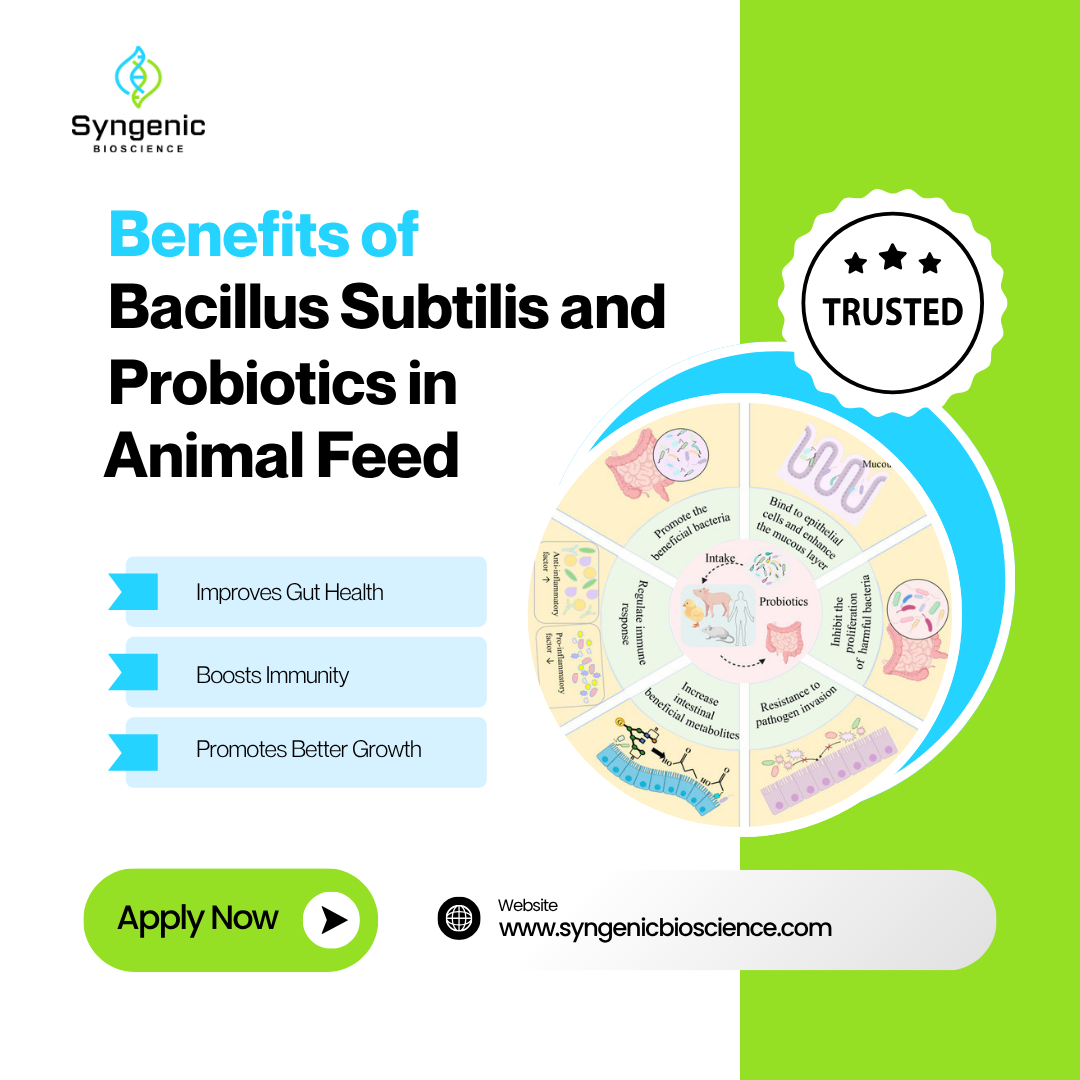
The first advantage of bacillus subtilis benefits to livestock includes the improvement of their gut health. This bacterium ensures a healthy balance of intestinal microflora and reduces the number of pathogenic bacteria.
Since this bacteria increases nutrient digestion and absorption, there will be an improvement in the feed conversion ratio (FCR). It implies that the animals need less feed to increase their body weight and thus save money.
The Bacillus subtilis bacteria enhance the immunity of animals through gut health improvement. It leads to reduced chances of infection.
Another benefit of the Bacillus subtilis animal feed is its heat resistance feature. Since it forms spores, the bacterial strain can withstand high temperatures while feed pellets are being produced.
The ability to produce enzymes makes probiotics improve digestion. These microorganisms help in digesting food and make nutrients absorbable by the body.
Due to reduced usage of antibiotics, there is a high demand for probiotics to fight against diseases, reduce resistance to antibiotics and improve growth.
With the use of probiotics during feeding of the animals, the animals grow fast and develop effectively.
Probiotics contribute significantly towards healthy animals, thus increasing the productivity of the livestock.
During chicken production, the use of probiotics increases because of its importance in ensuring good digestion, production of eggs and growth rates. It works well together with poultry feed enzymes.
During aquatic production, probiotics help in improving the water quality and aid in digestion of the fish and shrimps. Probiotics help to keep infections at bay thus improving survival rates.
During beef production, probiotics are used to improve health status of the cows and production of milk. Probiotics are very significant in supplying animal nutritional supplements.
It is important to identify the best feed probiotic supplier for effective results from the use of probiotics. Consider the following when selecting your supplier:
A supplier should offer a variety of high-quality products that have been scientifically proven to work effectively.
Livestock requires different strains. A feed probiotic supplier should stock different types of probiotic strains like Bacillus subtilis animal feed.
Ensure that the supplier provides technical assistance and support for applications. This assists in identifying the proper dosage and formulations.
It is important to check the suppliers to see whether their products meet certain industry standards.
Each firm is different. As such, probiotic suppliers must provide customized formulation in accordance with each firm’s unique demands.
Apart from providing digestive aid and boosting immunity, probiotics in livestock also assist in growth performance, among others. In order to be able to maximize efficiency in farming activities while reducing the need for antibiotics, probiotics are a great choice. To benefit from these powerful bacteria, one must choose reliable probiotics and a dependable probiotic supplier.
It is necessary to adopt these advanced animal nutrition supplements in order to enhance efficiency in livestock farming.