sales@synenzyme.com
+91 70435 76795

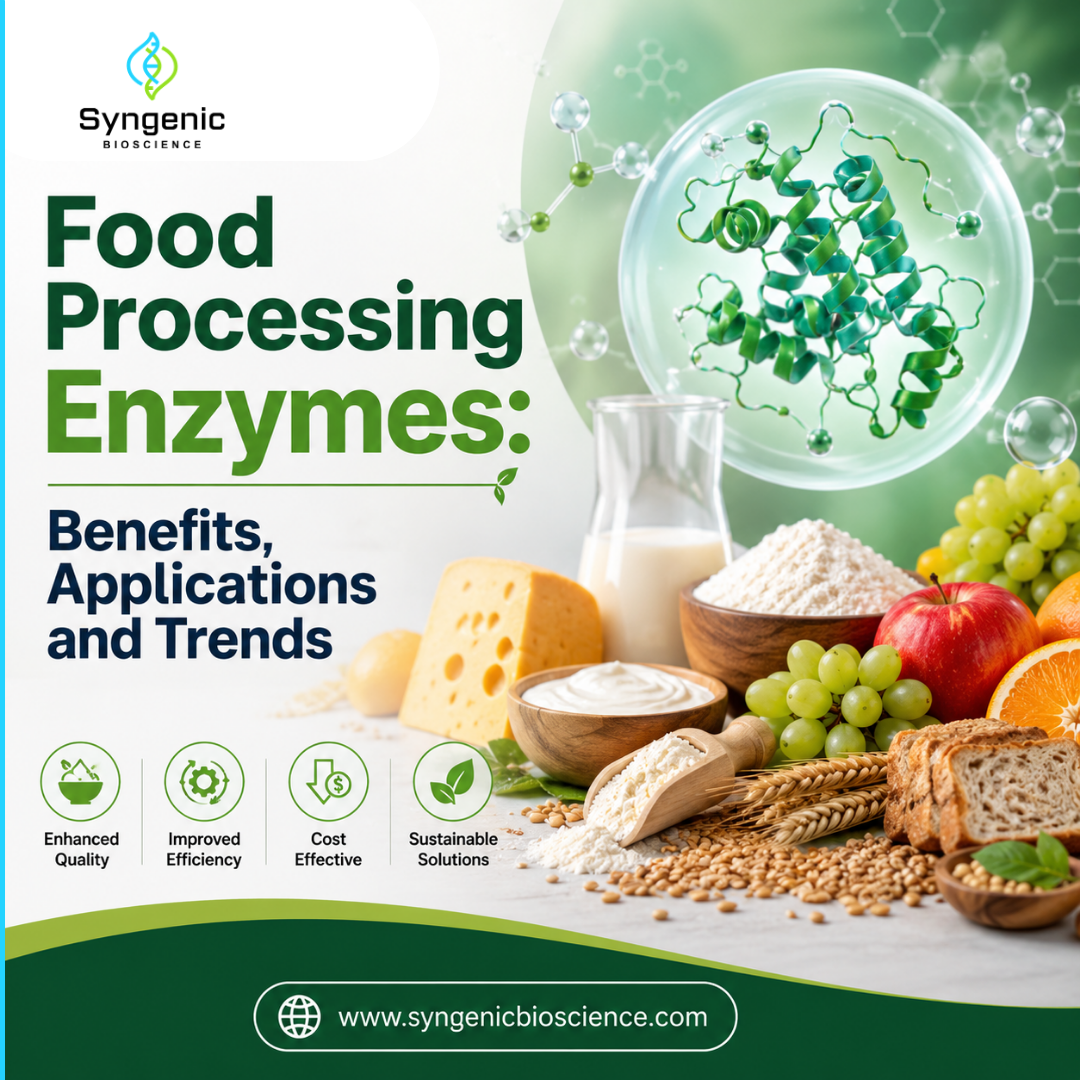
Food processing enzymes have been an important element of today’s food processing industry. Be it in improving the texture, flavour, or extending the shelf life, food enzymes contribute towards making the products better. That is the reason the importance of food processing enzymes are growing. Many food industries are rely on this enzymes to enhance their quality and production and actively searching for best Food enzyme manufacturer in India.
Many people still do not know what are food enzymes? Let’s discuss it further. Food processing enzymes are catalysts for biochemical processes occurring during the food manufacturing process. They are proteins extracted from animals, plants or microorganisms, which act in accelerating biological reactions taking place while processing food products.
Enzymes help break down complex molecules like carbohydrates, proteins and fats into simpler compounds making food easier to process and digest, without adding much extra effort on our side.
The use of food enzymes in food industry applications helps to:
Some important reasons are as follows:
Industrial food enzymes can help cut down on energy consumption, raw material waste and chemical usage, cutting production costs down the line.
Food grade enzymes help manufacturers maintain a consistent product quality that’s the same across all production batches.
Enzymes facilitates the sustainable processing. This is by reducing waste production and minimizing exposure to toxic chemicals.
There is an increasing trend among many food manufacturers who are using enzymes instead of synthetic chemicals in their products.
Different enzymes are used for specific food manufacturing applications.
Amylase enzymes break down starch into sugars and are widely used in things like:
Protease enzymes break down proteins into peptides and amino acids. These enzymes are commonly used in:
Lipase enzymes break down fats and oils. They are used in things like:
Lactase enzymes convert lactose into simpler sugars, making dairy products suitable for consumers with lactose intolerances.
Pectinase enzymes help to break down the pectin in fruit – which is a pretty key part of the process, and they’re mainly used for:
Cellulase and xylanase enzymes show up in all sorts of applications, including:-
Food enzymes are pretty widely used across the whole food manufacturing sector.
Bakery Enzymes play a big role in baking by making it easier to deal with dough, keeping bread soft and giving it a longer shelf life. A good bakery enzymes supplier will usually come up with custom enzyme blends that really improve the baking process and keep things consistent.
Food enzymes get used a lot in the dairy industry for things like:-
Food processing enzymes are used for things like juice clarification, brewing and wine processing. They really help with all sorts of issues such as filtration efficiency, getting the flavours right, and keeping things stable.
Protease enzymes are used to help with tenderizing meat and breaking down proteins – they make a huge difference when it comes to the overall quality.
Sugar Enzymes help get sugar conversion happening a little more smoothly, and also help with fermentation. That’s a big help when it comes to keeping costs down.
Food enzymes really improve things like consistency, purity and how products perform in the end.
These enzymes keep things fresh for longer and help reduce spoilage.
They help with all sorts of things like softness and flavour.
Enzymes can really speed things up in the factory – which is a big help with time and productivity.
Using enzymes can really help cut waste and lower energy costs
The food enzyme world is changing fast – which is thanks to changing consumer preferences and new technologies coming online.
People are getting more interested in foods with fewer artificial additives – so food manufacturers are looking for natural enzyme solutions to meet that demand.
Big food companies are moving towards more sustainable practices – and that includes using enzyme technologies to cut down on their impact.
The plant based market is growing fast – and that’s creating a demand for enzymes that can help make plant-based foods taste and feel more like the real thing.
You need to get the right food enzyme manufacturer behind you to ensure that your product is top quality and runs smoothly.
When it comes to picking the right food enzyme manufacturer, some things to consider are:
Industries choose our enzyme solutions because we provide:
Food processing enzymes have had a game-changing impact on modern food manufacturing – making it possible to manufacture better, faster & more sustainably. From bakes to dairy products to soft drinks and meat processing, enzymes have become an essential tool for food manufacturers wanting to achieve better results and meet consumer demands.
What are food processing enzymes?
Food processing enzymes are natural proteins. These speed up the chemistry of food production
Which enzymes are most commonly used in food processing?
Amylase, protease, lipase, lactase, pectinase, cellulose are the common ones.
How do enzymes improve food quality?
Enzymes really make a difference when it comes to taste, texture, digestibility, shelf life and product consistency
Are food processing enzymes safe?
Yes, food grade enzymes are seen as safe when used in line with approved food industry guidelines
What sorts of industries make use of food enzymes?
Pretty much all the key sectors – bakery, dairy, beverage, meat, sugar, starch and fruit processing all make use of food enzymes
What are the advantages of using enzymes in bakery products?
For starters they improve dough conditioning, bread softness, volume and shelf life
Which enzyme is used to clarify juice?
Pectinase is the one most commonly used for juice clarification and fruit processing
What is the future of food processing enzymes looking like?
The future’s looking good – expecting clean-label products, more sustainable food manufacturing, plant-based applications and custom enzyme solutions to take centre stage.