sales@synenzyme.com
+91 70435 76795



Probiotics are becoming an important part of modern food production, functional nutrition and health-oriented product development. The applications of probiotics in the food industry have expanded significantly, with manufacturers incorporating beneficial microorganisms into dairy products, fermented foods, functional beverages, dietary supplements and specialised nutritional formulations. Beyond food production, probiotics are also gaining attention for their role in supporting digestive health and maintaining a balanced gut microbiome.
As consumer awareness of gut health and preventive nutrition continues to grow, food and nutraceutical manufacturers are exploring innovative ways to incorporate probiotic microorganisms into their products. From traditional fermented foods to advanced probiotic formulations, these beneficial microorganisms offer opportunities to develop products that meet evolving consumer expectations.
However, successful probiotic product development requires careful strain selection, formulation expertise, processing considerations and quality control. Understanding how probiotics work and where they can be applied helps manufacturers develop effective, stable and commercially viable products.
In this article, we explore the major applications of probiotics in the food industry, their role in health solutions, manufacturing considerations and the importance of selecting the right probiotic strains for different applications.
Probiotics are live microorganisms that provide a health benefit to the host when administered in adequate amounts. They are commonly referred to as beneficial bacteria, although certain yeasts also have probiotic properties.
These microorganisms are naturally associated with the human gastrointestinal tract and are also used in the production of fermented foods, functional beverages and dietary supplements.
The effectiveness of probiotics depends on several factors, including the specific strain, quantity consumed, formulation, product quality and intended application.
Probiotic microorganisms include different species of bacteria and yeasts that have been studied for their potential applications in food and health products.
Some commonly used probiotic groups include:
Each microorganism has different characteristics, making strain selection an important consideration for food manufacturers and nutraceutical companies.
The gut microbiome consists of a complex community of microorganisms living in the digestive tract. These microorganisms interact with each other and contribute to several biological processes, including digestion, metabolism and immune system function.
Probiotics may support gut microbiome balance through different mechanisms, depending on the strain.
These mechanisms can include:
The benefits are strain-specific, and not every probiotic microorganism produces the same effects.
Different probiotic strains are selected according to their intended applications, functional properties and stability requirements.
For example, Lactobacillus strains are frequently used in fermented dairy products, while Bifidobacterium strains are commonly incorporated into digestive health formulations. Bacillus-based probiotics may be considered for applications where spore-forming characteristics are beneficial.
Saccharomyces boulardii is another well-known probiotic yeast used in specialised digestive health products.
Manufacturers should evaluate the scientific evidence, safety profile, viability and formulation compatibility of individual strains before selecting them for commercial applications.
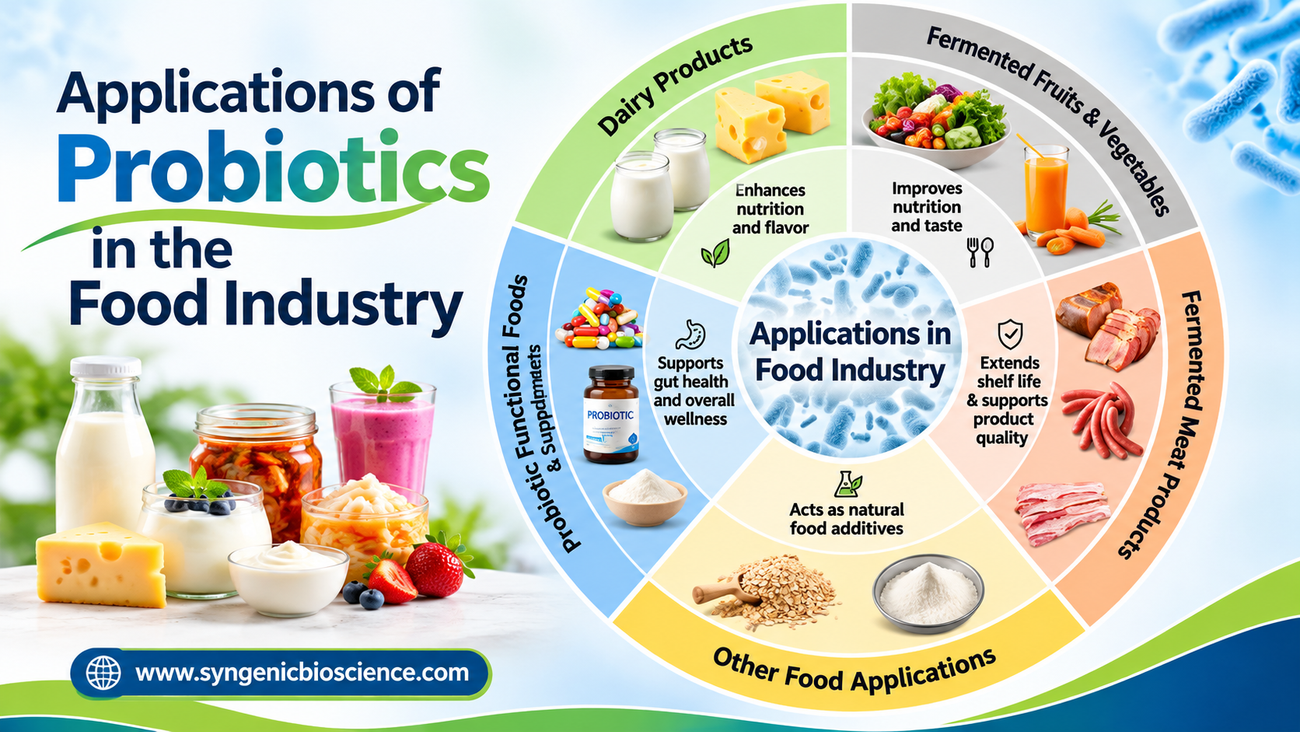
The applications of probiotics in the food industry extend beyond traditional fermented products. Food manufacturers are increasingly exploring probiotic ingredients to develop functional foods, nutritional beverages and specialised food formulations.
Probiotic microorganisms can be incorporated into different food categories, provided that the selected strains remain viable and suitable throughout manufacturing, storage and consumption.
Dairy products represent one of the most established applications of probiotics in the food industry. Products such as yoghurt, fermented milk, cheese and cultured dairy beverages provide suitable environments for incorporating selected probiotic microorganisms.
Lactobacillus and Bifidobacterium strains are commonly used in probiotic dairy formulations.
Some major applications include:
Manufacturers must consider fermentation conditions, acidity, processing temperatures and storage requirements to maintain probiotic viability.
Developing probiotic dairy products also requires balancing taste, texture, shelf life and microbial stability.
Fermented foods have traditionally been produced using microorganisms that transform food ingredients through biological processes.
Probiotics can be incorporated into selected fermented food products to develop functional formulations with additional nutritional value.
Common examples include:
The selection of appropriate microorganisms depends on the food matrix, fermentation process, flavour characteristics and desired product properties.
For manufacturers, probiotic fermentation offers opportunities to develop innovative products while maintaining the sensory qualities expected by consumers.
Functional foods are products developed to provide benefits beyond basic nutritional requirements. Probiotics are frequently used in this category because of their association with digestive health and gut microbiome balance.
Examples of probiotic functional foods include:
When developing these products, manufacturers must ensure that probiotic strains are compatible with other ingredients and remain viable throughout the product’s shelf life.
The growing interest in functional nutrition is creating opportunities for food companies to explore innovative probiotic formulations.
Probiotic beverages are gaining attention as consumers look for convenient ways to incorporate functional ingredients into their daily diets.
These products can include dairy-based drinks, fermented beverages and selected non-dairy functional drinks.
Common applications include:
Developing probiotic beverages requires careful consideration of pH, acidity, ingredient compatibility, oxygen exposure and storage conditions.
These factors can influence microbial survival and product quality. Therefore, selecting suitable probiotic strains and appropriate formulation technologies is essential.
The demand for plant-based food products has encouraged manufacturers to explore new applications for probiotic microorganisms.
Plant-based ingredients such as soy, almonds, oats and other plant-derived materials can be used to develop fermented and probiotic-enriched products.
Potential applications include:
However, plant-based formulations may have different nutritional compositions, acidity levels and processing characteristics compared with dairy products.
Manufacturers must evaluate the compatibility of probiotic strains with the selected plant-based ingredients to achieve the desired product quality and microbial stability.
Probiotic microorganisms are also being explored in selected fermented meat products and other specialised food applications.
In fermented meat production, certain bacterial cultures contribute to fermentation, acidity development and product characteristics. However, not every starter culture used in fermentation qualifies as a probiotic.
Additional research and validation are necessary when selecting strains intended to provide probiotic benefits.
Food manufacturers must also consider food safety requirements, processing conditions and the suitability of microorganisms for the intended application.
Beyond food manufacturing, probiotics have become important ingredients in health-oriented products and nutritional formulations.
Their applications are particularly relevant to digestive wellness, gut microbiome research and specialised nutritional products.
However, probiotic benefits depend on the specific strain, dosage and available scientific evidence. Health claims should always be supported by appropriate research.
Digestive health is one of the most widely studied areas of probiotic research.
Certain probiotic strains have been investigated for their ability to support digestive function and maintain a balanced intestinal microbial environment.
Their potential mechanisms include:
Specific strains, including selected Lactobacillus, Bifidobacterium and Saccharomyces boulardii strains, have been studied for different digestive health applications.
For product developers, selecting strains with relevant clinical evidence is important when creating digestive health supplements.
The gut and immune system are closely connected. The gastrointestinal tract contains a significant part of the body’s immune activity and interacts continuously with the gut microbiome.
Certain probiotic strains have been studied for their interactions with immune responses and intestinal barrier functions.
Depending on the strain, probiotics may influence:
These properties make probiotics relevant to research and development in specialised nutritional and wellness products.
A balanced gut microbiome plays an important role in maintaining normal digestive and metabolic functions.
Factors such as diet, lifestyle, age, medications and environmental conditions can influence the composition of gut microorganisms.
Probiotic formulations are developed to introduce selected beneficial microorganisms into the digestive system.
Different strains may provide different functional properties, making scientific strain selection essential.
Manufacturers developing gut health products should focus on documented strain characteristics, product viability and evidence supporting the intended application.
Certain probiotic microorganisms have been studied for their potential influence on nutrient availability, digestion and metabolic processes.
Some microorganisms produce enzymes or metabolites that can contribute to the breakdown of specific food components.
For example, selected microbial cultures are involved in fermentation processes that may improve the availability or digestibility of certain nutrients.
The effects depend on the microorganism, food matrix and processing conditions.
This makes probiotics an interesting area for developing specialised functional foods and nutritional formulations.
Probiotics are also used in specialised nutritional products developed for different consumer groups.
Certain Lactobacillus and Bifidobacterium strains have been studied for applications related to women’s health, while selected strains are also used in infant and children’s nutritional formulations.
Important considerations include:
Product developers should avoid using a general probiotic formulation for every consumer group. Specific applications require appropriate scientific and regulatory evaluation.
The increasing interest in preventive nutrition and digestive wellness has created opportunities for probiotic ingredients in the nutraceutical and functional food industries.
Manufacturers are incorporating probiotics into different product formats to meet consumer demand for convenient and specialised nutritional solutions.
Probiotic dietary supplements are commonly developed in different delivery formats, including:
These products may contain single probiotic strains or combinations of multiple microorganisms.
Manufacturers must consider CFU (colony-forming units), strain identity, microbial viability and storage stability when developing probiotic supplements.
The formulation should also protect sensitive microorganisms from environmental conditions that may reduce their viability.
Synbiotics combine probiotics with substrates that are selectively utilised by host microorganisms and provide a health benefit.
These formulations generally combine selected probiotic strains with prebiotic ingredients such as certain fibres or oligosaccharides.
Potential applications include:
The selection of compatible probiotic and prebiotic ingredients is important for developing stable and effective synbiotic formulations.
Probiotics are also used in specialised nutritional products designed for particular dietary and wellness applications.
Examples include:
Each product category requires a formulation strategy based on the intended consumer, ingredient compatibility, stability and regulatory requirements.
Consumer awareness of gut health has increased interest in probiotic products across food, nutrition and healthcare-related markets.
This trend is encouraging manufacturers to explore new probiotic strains, delivery formats and combination formulations.
For nutraceutical companies, probiotic ingredients offer opportunities to develop differentiated products that address specific nutritional and digestive wellness requirements.
Using probiotics in commercial food production requires more than simply adding beneficial microorganisms to a product.
Manufacturers must understand the biological characteristics of selected strains and how different processing conditions influence their survival.
The following considerations play an important role in successful probiotic manufacturing.
Strain selection is one of the most important steps in probiotic product development.
Different strains have different functional characteristics, environmental tolerances and formulation requirements.
Manufacturers should evaluate:
The selected microorganism should be appropriate for the product’s intended purpose and manufacturing environment.
Fermentation is widely used in the production of probiotic cultures and fermented food products.
During fermentation, microorganisms grow under controlled conditions and utilise available nutrients to produce cellular biomass and metabolic compounds.
Important production parameters include:
Maintaining consistent fermentation conditions helps manufacturers achieve reproducible production results and maintain the required microbial quality.
One of the biggest challenges in probiotic food manufacturing is maintaining the viability of microorganisms during processing.
Certain strains may be sensitive to heat, acidity, moisture, oxygen and other environmental factors.
Processing methods such as pasteurisation, drying and exposure to unsuitable storage conditions can reduce the number of viable microorganisms.
Manufacturers can address these challenges through:
The objective is to maintain the required viable microbial count throughout the product’s intended shelf life.
Microencapsulation is a technology used to protect probiotic microorganisms from challenging environmental conditions.
It involves enclosing microorganisms within protective materials that can help improve their stability during processing, storage and gastrointestinal transit.
Depending on the formulation, encapsulation materials may include selected polysaccharides, proteins and other food-compatible ingredients.
Potential benefits include:
The effectiveness of microencapsulation depends on the microorganism, encapsulation material and intended product application.
Quality control is essential for ensuring the consistency and reliability of probiotic products.
Manufacturers should implement suitable testing procedures throughout production and storage.
Important quality parameters include:
CFU levels should be evaluated at the relevant stages, particularly at the end of the stated shelf life, to ensure that products meet their declared specifications.
Although probiotics offer several opportunities for food manufacturers, their commercial application involves technical and formulation challenges.
Understanding these limitations helps manufacturers develop more stable and reliable products.
Some probiotic microorganisms are sensitive to heat, pressure and other processing conditions.
Food processing methods may reduce microbial viability, affecting the final probiotic content.
Selecting suitable strains and optimising production parameters are important steps in addressing this challenge.
Environmental conditions can significantly influence probiotic stability.
High moisture levels, temperature fluctuations and oxygen exposure may affect the viability of certain microorganisms.
Manufacturers should select suitable packaging materials and storage conditions according to the characteristics of the probiotic strain.
Probiotic products must maintain their intended microbial specifications throughout their stated shelf life.
Manufacturers should conduct stability studies under appropriate storage conditions to evaluate changes in viable cell counts over time.
This helps determine suitable formulation parameters, packaging requirements and storage recommendations.
Probiotic products must meet relevant food safety, quality and regulatory requirements in their target markets.
Manufacturers should ensure appropriate strain identification, microbiological testing, labelling accuracy and substantiation of health claims.
Regulatory requirements can vary between countries, making market-specific compliance an important consideration during product development.
Choosing the right probiotic strain is essential for developing products that deliver the intended functionality and maintain consistent quality.
Food manufacturers and nutraceutical companies should consider the following factors before selecting probiotic ingredients.
Start by identifying the final product category and its intended application.
For example, probiotic yoghurt may require strains suitable for dairy fermentation, whereas a dietary supplement may require microorganisms with appropriate survival and storage characteristics.
The intended product should guide the selection process.
Different probiotic strains have different functional and technological properties.
Evaluate strain identity, safety, viability, stability and scientific evidence before selecting an ingredient.
Do not assume that all strains belonging to the same bacterial species provide identical benefits.
CFU refers to colony-forming units and indicates the number of viable microorganisms capable of forming colonies under specified testing conditions.
Manufacturers should determine the appropriate viable count for their intended product and ensure that the formulation maintains the required levels throughout shelf life.
Safety and scientific validation are essential when selecting probiotic ingredients.
Consider:
These factors help ensure that probiotic ingredients are suitable for their intended applications.
Working with an experienced probiotic manufacturer can help businesses identify suitable ingredients and develop application-specific formulations.
Consider the manufacturer’s ability to provide:
These capabilities can help food and nutraceutical businesses develop products aligned with their manufacturing requirements.
Selecting the right probiotic manufacturer is an important decision for food processing companies, nutraceutical brands and nutritional product developers.
A reliable manufacturing partner should understand microbial characteristics, formulation requirements and the technical challenges associated with probiotic product development.
Syngenic Bioscience works in the enzyme and probiotic space, offering probiotic-related solutions for businesses looking for specialised ingredients and formulations.
Consistency is important when manufacturing probiotic products at a commercial scale.
Manufacturers need appropriate microbial identification, quality specifications and testing procedures to ensure reliable ingredient performance.
Working with a supplier that understands these requirements can help businesses maintain consistency across production batches.
Different applications may require different probiotic strains and combinations.
Single-strain concentrates can be suitable when a manufacturer requires a specific microorganism, while customised multi-strain blends can be considered for formulations involving multiple probiotic cultures.
The choice depends on product requirements, strain compatibility and intended functionality.
Research and development play an important role in selecting suitable probiotic strains and developing application-specific formulations.
Manufacturers should consider microbial characteristics, ingredient compatibility, processing conditions and product stability during development.
Quality assurance processes are equally important for maintaining product specifications and supporting commercial production.
Food manufacturers and nutraceutical businesses require probiotic ingredients that align with their product formats and manufacturing objectives.
Syngenic Bioscience provides a relevant starting point for businesses exploring probiotic ingredients, specialised formulations and related manufacturing solutions.
Explore the Syngenic Bioscience to learn more about its enzyme and probiotic expertise.
The future of probiotics is closely connected to developments in functional nutrition, microbiome research and food technology.
As manufacturers explore new product categories, probiotic applications are expected to expand across conventional foods, plant-based products, functional beverages and specialised nutritional formulations.
Consumers are increasingly interested in foods that combine nutritional value with additional functional benefits.
This is creating opportunities for probiotic-enriched dairy products, fermented foods, functional beverages and other specialised food categories.
Manufacturers that focus on product quality, formulation stability and scientific validation can explore these growing market opportunities.
Innovations in microencapsulation, protective delivery systems and advanced drying technologies are helping address some of the challenges associated with probiotic stability.
These technologies can improve the suitability of selected probiotic strains for different food and supplement applications.
Microbiome research is contributing to a better understanding of the relationship between microorganisms, nutrition and human health.
Emerging areas include personalised nutrition, next-generation probiotics and specialised microbial formulations.
However, these developments require further scientific validation before broad health claims or commercial applications can be established.
The expanding applications of probiotics provide opportunities for manufacturers to develop differentiated products.
Businesses can explore:
Successful product development will depend on selecting appropriate strains, maintaining quality and meeting relevant regulatory requirements.
Probiotics are used in dairy products, yoghurt, fermented foods, functional beverages, plant-based foods and specialised nutritional products. They are incorporated into food formulations to provide viable beneficial microorganisms and support specific functional properties.
Common probiotic food products include yoghurt, fermented milk, certain cheeses, cultured beverages and selected fermented plant-based products. Some manufacturers also develop probiotic-enriched functional foods and nutritional drinks.
Certain probiotic strains have been studied for their potential to support digestive health, gut microbiome balance and interactions with the immune system. Their benefits depend on the specific strain, dosage and scientific evidence.
Commonly used probiotic microorganisms include selected Lactobacillus and Bifidobacterium species, along with certain Bacillus strains and probiotic yeasts such as Saccharomyces boulardii. The choice depends on the intended food application and product formulation.
Yes. Probiotics are used in selected fermented milk drinks, plant-based beverages and other functional drinks. Manufacturers must consider acidity, temperature, oxygen exposure and storage conditions to maintain microbial viability.
Probiotics are live microorganisms that provide a health benefit when administered in adequate amounts. Prebiotics are substrates selectively utilised by host microorganisms that provide a health benefit. Both can be combined in appropriately designed synbiotic formulations.
Food manufacturers can improve probiotic stability by selecting suitable strains, optimising processing conditions, using appropriate protective technologies, selecting suitable packaging and conducting shelf-life stability testing.
Manufacturers should evaluate strain identity, safety, scientific evidence, CFU requirements, processing compatibility and storage stability. The selected strain should match the intended food or health application.
Probiotics are creating new opportunities across the food, functional nutrition and nutraceutical industries. From fermented dairy products and functional beverages to specialised dietary supplements, their applications continue to expand as manufacturers explore innovative product formulations.
However, developing successful probiotic products requires the right combination of strain selection, formulation expertise, manufacturing processes and quality control.
Syngenic Bioscience works with businesses in the enzyme and probiotic sector, supporting the development of probiotic-related solutions for different industry requirements.
Whether you are exploring probiotic ingredients for food manufacturing, developing functional nutritional products or looking for customised probiotic formulations, choosing the right manufacturing partner is an important step.
Looking for probiotic ingredients or customised probiotic solutions for your business?
Contact Syngenic Bioscience to discuss your requirements and explore suitable probiotic solutions for your application.
